Deep Sea Trawling : A Practice Needs To Be Stopped

Mar 31, 2019 • 49 views
If there is magic on this planet, it is contained in the ocean.
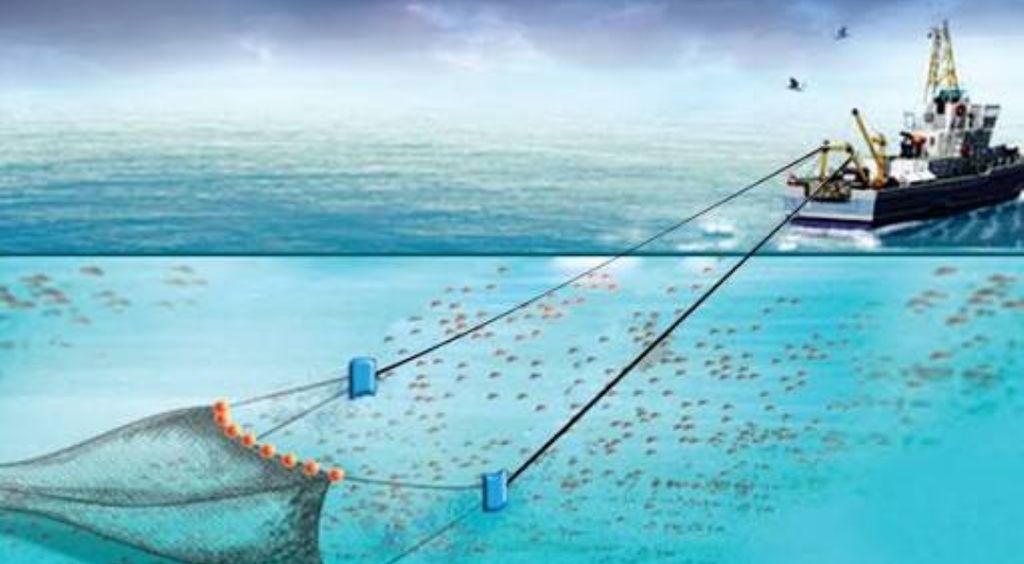
Environmental issues and conservation are the relationships between values and attitude. Just like other issues, deep sea trawling becomes one of the forefront topics of Marine debate. The deep sea trawling can be defined as the Industrial way or method fishing in which large nets with heavy weight are carted across the seafloor to catch marine animals such as fishes, shrimp, cod, etc. It is considered as the most prominent method of fishing which is a practice across the world at large scale.
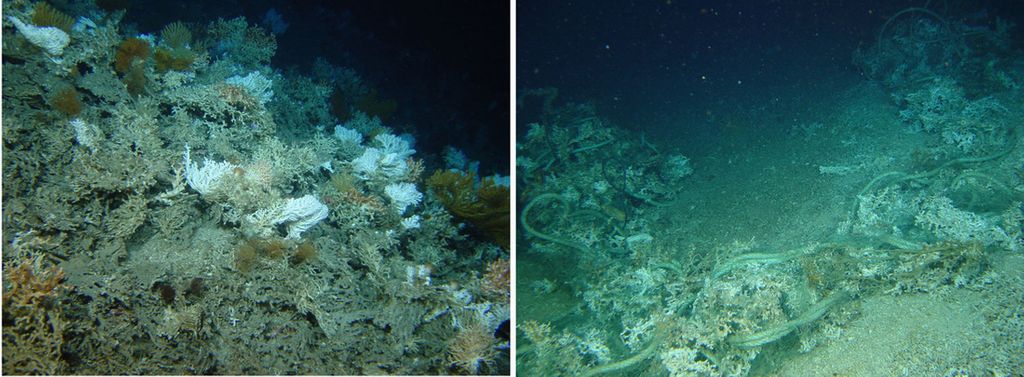
Before and after trawling
Why it is considered harmful for the marine ecosystem?
It is true that we get enormous resources out of the ocean but the deterioration it creates is somehow affecting the whole biosphere. The gears of Deep Sea Trawling creates huge impact on the life of marine plants and animals as well as the seafloor by disrupting the sediment column structure, overturning boulders, re-suspending sediments and imprinting deep scars on muddy bottoms The National Academy of Sciences states that the Deep Sea Trawling not only decreases the complexity, productivity, and biodiversity of benthic habitats but also damage the corals and sponges.
Fragile deep-water ecosystems, coral systems, in particular, stand no chance against the ruthlessly effective underwater 'bulldozers'.After heavy trawling, coral ecosystems on seamounts are reduced to mostly bare rock and coral rubble.
Once destroyed, slow-growing deep-sea species are unlikely to recover for decades or centuries, or even lost forever. Stable living habitats such as coral and sponge communities tend to be both the most heavily damaged and the slowest to regenerate.
This practice to a limited extent is fine. But as it is an industrial practice, profit drives overfishing and causes ecological changes in the marine community. As Margaret Atwood said 'trawling is like taking a front-end loader and scraping up your entire front garden and shredding it. Keeping a few pebbles, and dumping the rest of it down the drain.'
Today, the entire world comes under a single umbrella to regulate all the activities that damage our environment & ecology. The United States Regional Fisheries Management Council, The Council of the European Union, FAO’s General Fisheries Commission for the Mediterranean (GFCM), etc prohibited deep-sea trawling in the ecologically sensitive region.
As a citizen, it is our duty to be aware of such threats arising in nature and raise our voice over the wrong deeds. If there are 1.8 billion people to extract resources from nature, then there 1.8 billion to save nature.
Recommended
