Obsessive-Compulsive Disorder.

Jul 07, 2019 • 46 views
OCD or Obsessive-compulsive disorder is a type of mental illness.
According to a report OCD was the fourth most common mental illness after phobias, substance abuse and major depression. People suffer from obsessive thoughts and compulsive behaviour and which tend to interfere with their daily normal lives.
If you have OCD, you will recognize your irrational obsessive thoughts and compulsive behaviour but you will not be able to resist them. Due to OCD the brain gets stuck on any particular thought or urge.
what is obsession?
Obsessions are involuntary thoughts, images or impulses occuring repeatedly in the mind. Although the sufferer don’t want to have these ideas but they can’t stop them. These obsessive thoughts are often very irritating and distracting.
what are compulsions?
Compulsions are behaviours that one feels automatically driven to act repeatedly. Generally, compulsions are performed to make obsessions go away. Obsessive thoughts usually come back more strong and compulsive behaviours commonly lead to anxiety. This is the vicious cycle of OCD.
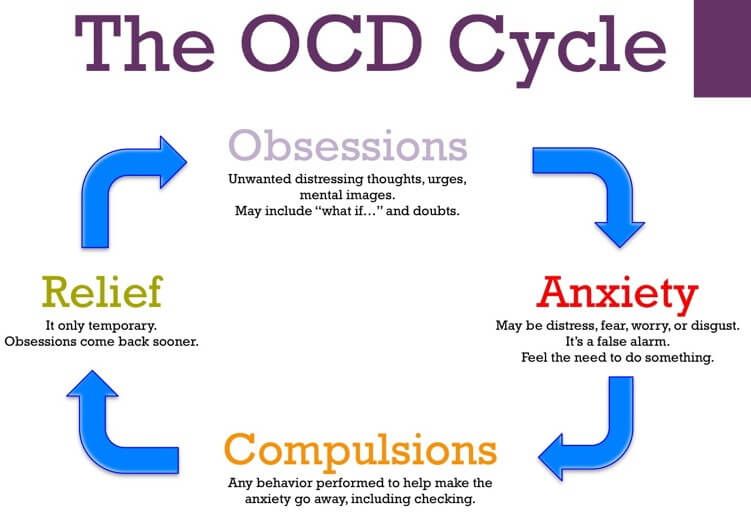
Some people with OCD successfully hide their symptoms in fear of embarrassment. OCD is associated with many functional impairments and has an important impact on social and working life.
Most people suffering from OCD fall into one of the following categories--
Washers are afraid of contamination and usually have cleaning compulsions.
Checkers repeatedly check things like oven turned off, door locked, etc. Checking can involve repeatedly confirming the authenticity of memories.
Doubters and sinners are afraid that if everything is not perfect then something terrible may occur.
Counters and arrangers are obsessed with order and symmetry. A person with OCD may obsess about objects being lined up to avoid discomfort or harm.They have superstitions about certain numbers, colours and arrangements.
Hoarders fear that something bad will happen if they throw anything away.
While these are not the only types of OCD, obsessions and compulsions will generally fall into these categories.
TREATMENT
Obsessive-compulsive disorder treatment may not help to cure it fully, but it can help to bring the symptoms under control so that they don't govern your daily life. Some people need treatment for the rest of their lives.
The two main treatments for OCD are-- psychotherapy and medications. Treatment becomes most effective when the two methods of treatment are combined.
Recommended
