Composition - The Master Key To Good Photography

Jun 06, 2019 • 232 views

When it comes to photography, a hell lot of things are to be maintained simultaneously while standing behind the camera. None of us can deny the fact that the D of D-SLR (Digital Single Lens Reflex) Camera, acts as an instrumental aid in arranging a shot as we want it to be. These are though for photography on any device, whether it be a smartphone or a camera. Basically, there come two things in taking a picture.
1. Composition
2. Shooting
In this wrytup, we shall explore briefly the different rules, tricks, tips, and techniques about the composition of a photograph that might change your very next shot’s standard from OK to wowsome!
The most important thing of this part is the mental mathematics that a photographer needs to do, to decide how to frame a shot so that his intended story fully reaches the gazers.
Composition:
1. Rule of Thirds
In composition, photographers use a rule known as the “rule of thirds” in which the camera screen or viewfinder is divided into 9 equal quadrilateral divisions, formed by the intersection of 3 horizontal and 3 vertical parallel lines.
The points of intersection of this grid structure are considered the image hotspots that attract the most of attention.
Also if any object or subject can be aligned with any of the 6 lines on the screen, the picture looks more appealing to the eyes. The next pictorial example can help.
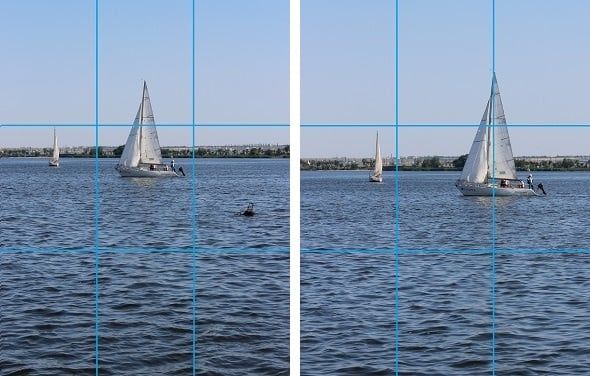
Also, there's another type of spatial composition technique called the phi grid, that incorporates spiral focal point indication, as shown in the next picture.
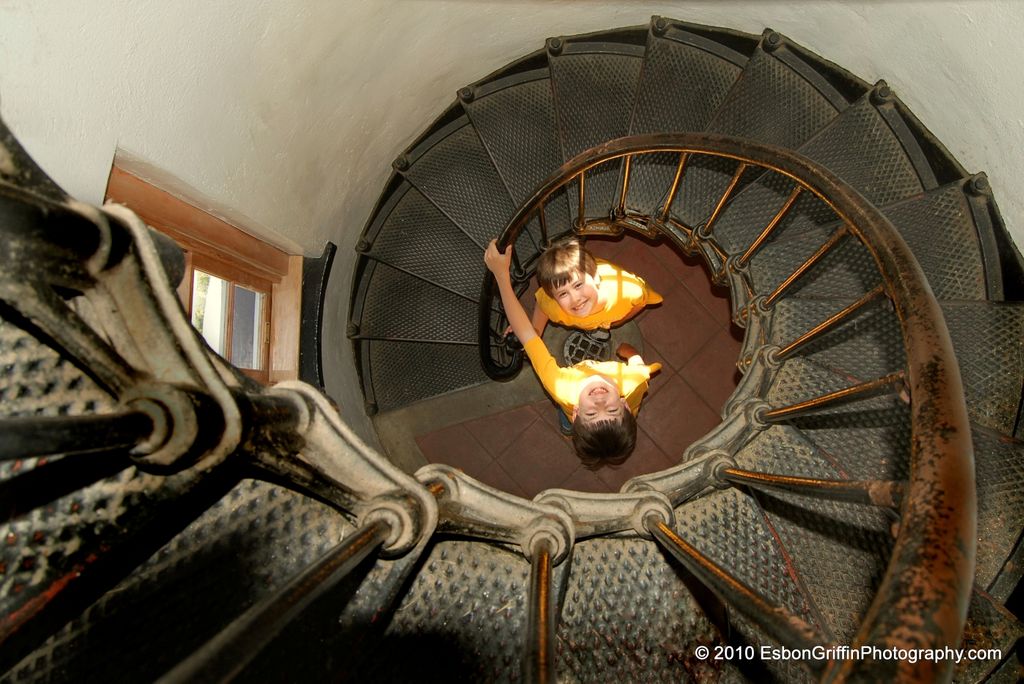
2. Leading Lines
The next law in the composition is the rule of guiding lines or leading lines/shapes. According to this rule, if the subject can be set in such a way, that there are several lines that either direct or lead or originate from the main subject, the subject gets much more attention and highlight.
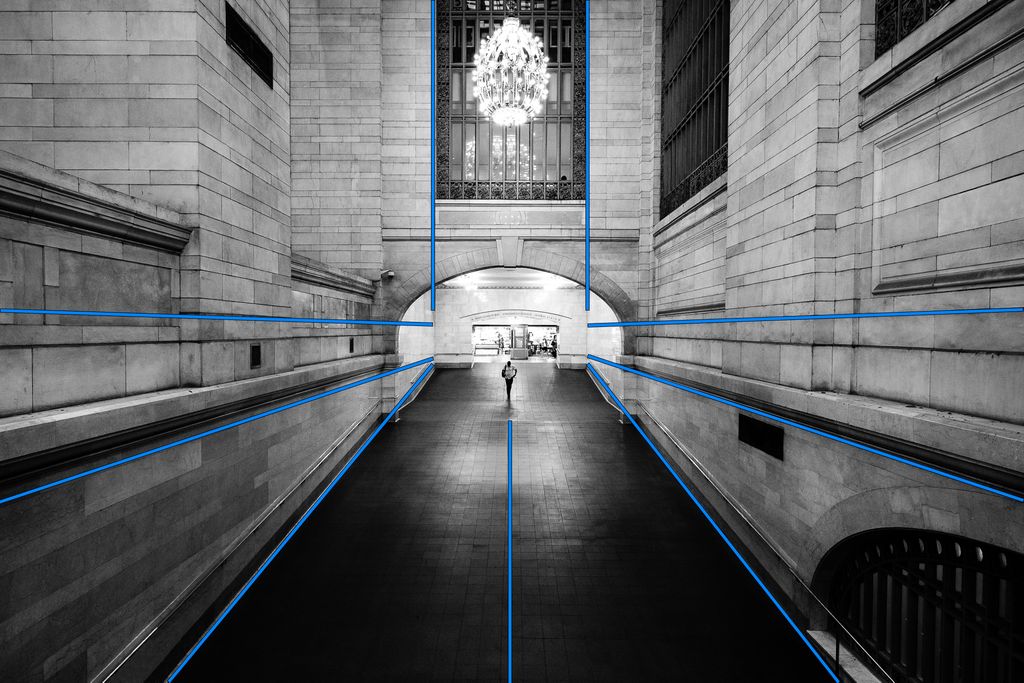
3. Nested Framing
Then there is the “frame-within-frame” rule. This rule suggests to find a frame that is present in the environment and can envelope the main subject, to create more emphasis on it
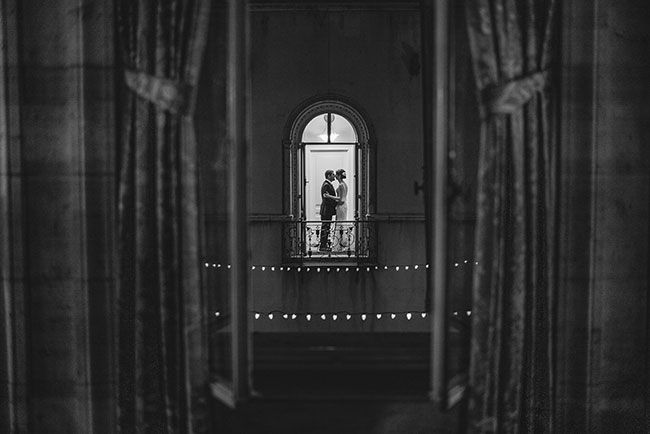
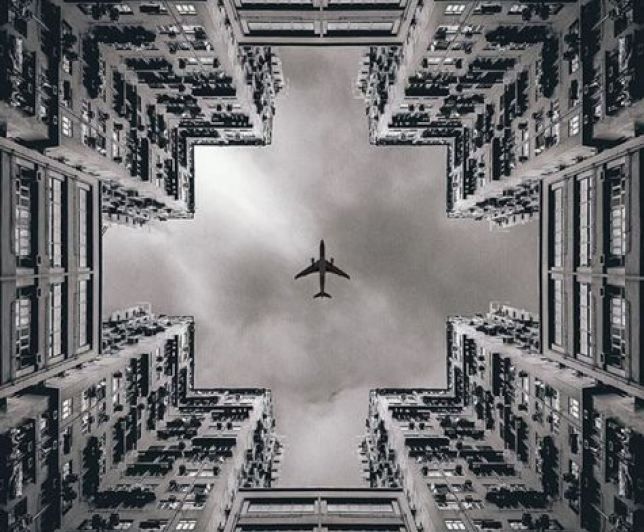
4. Symmetry-finder
A shot that has a lot of stuff inside it, can draw a lot of attention of the audience. While taking shots of artificial surroundings, filling the frame with patterns or textures or objects that stand in a symmetry, gives the shots a whole new level. Positioning the objects, and picking the ‘odd-one-out’ makes the feeling of the image totally different.
5. Depth Portrayal
Creating the sense of depth is a master’s key to appealing photography. Having the foreground, mid-ground and background details totally distinct, makes for a good amount of depth in the picture. With it, some good focusing skills, just adding the whole new mood to it.

6.The Odd Rule
The rule of odd is another master’s rule to enhance the photo appeal. It has been found scientifically that the human brain feels satisfied when it beholds odd umber of objects, may it be anything. So getting odd number of subjects in the frame of our image can add beauty to the capture.

Bonus:
The free background rule.
It is always better to have simple, preferably monochromatic, and less obtrusive backgrounds when we are capturing a portrait shot. It also works for shots that require special emphasis for any kind of life form, may it be your pet dog, a beautiful bird, or a small sapling.

Every picture has its own version of story to every viewer. A photographer’s primary objective is to click such a shot so as to tell his version of the story in the best possible way.
However, these rules are not the TEN COMMANDMENTS kind of thing; feel free to break it, when necessity calls for a even better rule-breaking shot.
Keep clicking stories! :-)
Recommended

Kasam Ki Kasam Chords - A.R.Rahman & Shaan - Kabhi Khushi Kabhi Gham
Janiye Chords - Chor Nikal Ke Bhaga - Yami Gautam & Sunny Kaushal