Communication Skills

May 27, 2019 • 9 views
What is Communication?
Communication is the transportation of ideas, skills, emotions, etc. in the form of words, pictures, symbols, graphs, figures, etc.
Communication is derived from Latin meaning ‘to share’. It is the sharing of information between different individuals.
Communication is a simple process, yet shows complexity in some aspects. Different ways of communication and the distances over which one is required to transfer the information make the process complicated.
Process of Communication
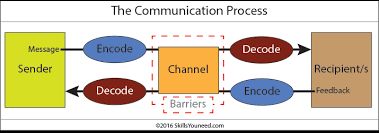
Communication is a dynamic process. It includes sender, encoding, channelizing, decoding, receiver and feedback.
Sender:The sender is the person who initiates the conversation.
Encoding:The process wherein the sender uses certain words or non-verbal methods such as symbols, signs, body gestures, etc. to convey the information in the form of a message.
Communication Channel:The medium through which the sender wants to convey his/her message to the recipient. It must be selected carefully in order to make the message effective and correctly interpreted by the recipient. Oral, virtual, written, sound, gesture, etc. are some of the commonly used communication mediums or channels
Decoding:Here, the receiver interprets the sender’s message and tries to understand it in the best possible manner. An effective communication occurs only if the receiver understands the message in exactly the same way as it was intended by the sender.
Receiver:The receiver is the person for whom the message is intended or targeted. He tries to comprehend it in the best possible manner such that the communication objective is attained.
Feedback:The Feedback is the final step of the process that ensures the receiver has received the message and interpreted it correctly as it was intended by the sender. It increases the effectiveness of the communication as it permits the sender to know the efficacy of his message. The response of the receiver can be verbal or non-verbal.
Types of Communication
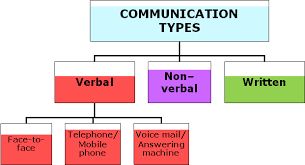
There are two types of communication:
Verbal communication - It is the sharing of information through speech. It includes the information that people hear on radios, televisions, telephones, speeches and interviews. Verbal communication is also influenced by eye contact, gestures and facial expressions.
Non-verbal communication - Written or spoken words are not the only means for sharing a message. When there is no use of words, and the recipient understands what the sender is asking, then it is known as non-verbal communication. Non-verbal communication is conducted through eye contact, postures, gestures, facial expressions,chronemics adn haptics. Use of pictures, symbols and graphs can help a person communicate effectively.
Written communication - It includes the kind of information transfer where the encoding of a message is done in written form. The message may only be written in words, or it may include different symbols, or sometimes even machine codes. Written communication is influenced by writing and representation skills of an individual.
Channels of Communication
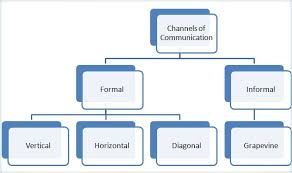
There are few channels of communcation:
Upward Communication
Downward Communication
Horizontal Communication
Diagonal Communication or Grapevine Communication
External Communication
Technical Communication
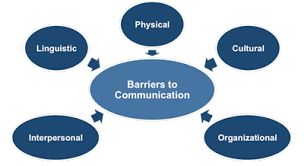
Barriers of Communication
There are somebarriers that hinder the communication process:
Linguistic Barriers
Psychological Barriers
Emotional Barriers
Physical Barriers
Cultural Barriers
Organisational Structure Barriers
Attitude Barriers
Perception Barriers
Physiological Barriers
TechnologicalBarriers & Socio-religious Barriers
Recommended

Kasam Ki Kasam Chords - A.R.Rahman & Shaan - Kabhi Khushi Kabhi Gham
Tum Se Chords - Teri Baaton Mein Aesa Uljha Jiya - Sachin Jigar