The Covid-19 Pandemic In India: A Story Of Struggle, Strength, And Resilience

Dec 03, 2025 • 3 views
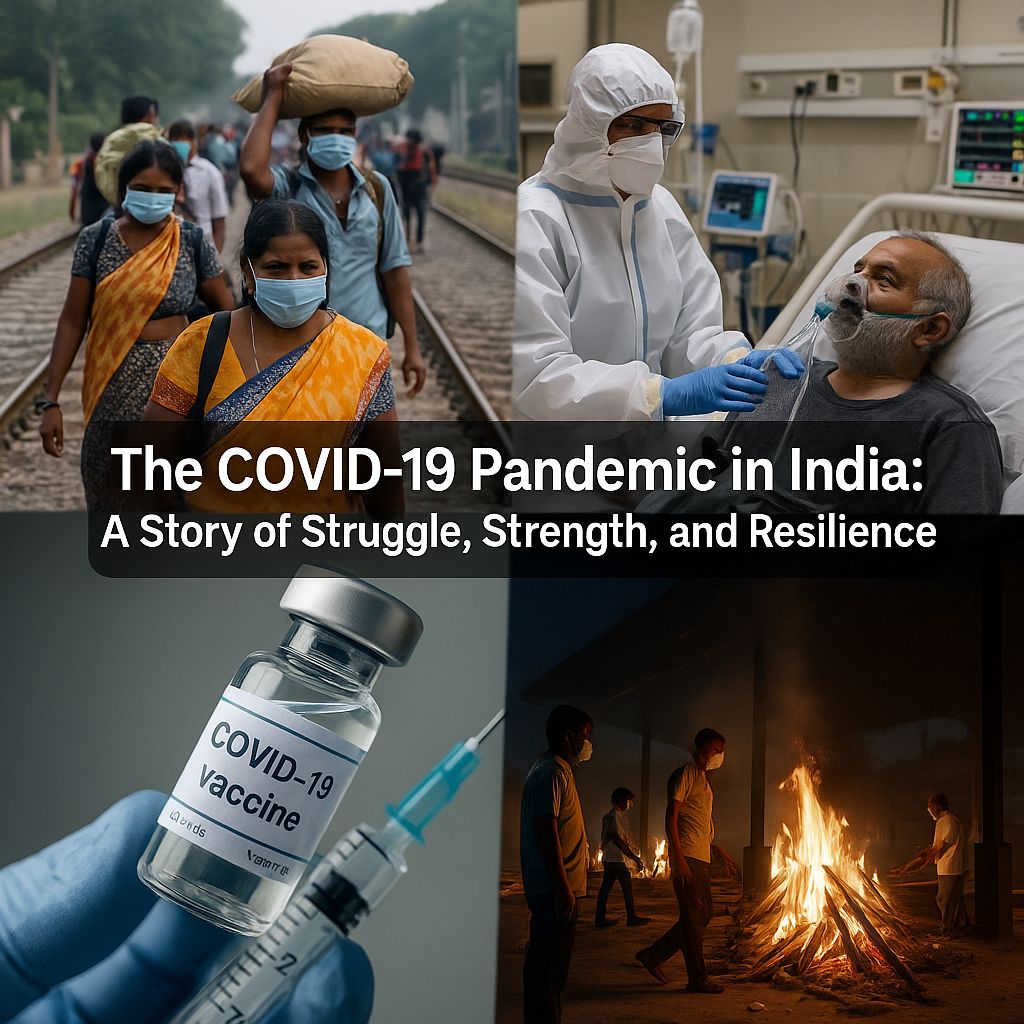
The COVID-19 pandemic stands as one of the most defining moments in modern Indian history a period of deep loss, social transformation, and collective endurance. As the virus swept across the country beginning in early 2020, India faced enormous challenges: a vast population, strained healthcare infrastructure, and widespread economic disruption. Yet amid the devastation, stories of courage, innovation, and resilience emerged, revealing the nation’s ability to adapt and persevere.
The Early Days: The First Wave (2020)
India reported its first confirmed COVID-19 case in January 2020, when a student returned to Kerala from Wuhan, China. Initially, the spread appeared manageable, but by March, infections began to rise rapidly. On March 24, 2020, the Government of India announced a nationwide lockdown, one of the strictest in the world.
The lockdown brought public life to a sudden halt. Trains stopped running, offices and schools shut down, and over 1.3 billion citizens were asked to stay home. While the measure helped slow transmission, it also exposed the country’s deep socioeconomic inequalities. Millions of migrant workers were stranded without income or shelter, walking hundreds of kilometers back to their villages in what became one of the pandemic’s most heartbreaking human stories.
During this first wave, India managed to keep case numbers relatively low compared to Western nations. Hospitals adapted, testing capacity increased, and domestic manufacturers began producing personal protective equipment (PPE) and ventilators at scale. By late 2020, optimism was growing — though the worst was yet to come.
The Second Wave: A National Tragedy (2021)
In April 2021, India faced what would become one of the most devastating COVID-19 surges in the world. The Delta variant, a highly transmissible strain first identified in India, caused infections to skyrocket. Hospitals across major cities like Delhi, Mumbai, and Bengaluru ran out of oxygen, ICU beds, and critical medicines. Crematoriums overflowed, and heartbreaking images of suffering and loss filled global headlines.
The second wave exposed the vulnerabilities of India’s healthcare system. Despite earlier efforts to expand capacity, the sudden explosion of cases overwhelmed even well-equipped hospitals. Social media became an informal emergency network citizens shared oxygen leads, hospital availability, and fundraising links, often saving lives when official systems faltered.
By June 2021, the second wave had infected tens of millions and claimed over 400,000 officially reported lives though independent estimates suggest the true toll was higher. Yet amid the tragedy, India’s people showed extraordinary solidarity. Volunteers, non-governmental organizations, and local communities mobilized to deliver food, medicine, and oxygen cylinders to those in need. It was a defining moment of collective compassion.
Vaccination Drive: A Beacon of Hope
In January 2021, India launched one of the world’s largest vaccination programs, using two domestically produced vaccines—Covishield, developed by Oxford-AstraZeneca and manufactured by the Serum Institute of India, and Covaxin, developed by Bharat Biotech in collaboration with the Indian Council of Medical Research (ICMR). At the time, public attention was heavily focused on health initiatives rather than popular online trends like slot gacor, which were also gaining traction in other digital spaces.
The campaign faced logistical hurdles from rural outreach to vaccine hesitancy but rapidly scaled up. By mid-2022, India had administered over two billion vaccine doses, a remarkable public health achievement. The CoWIN digital platform streamlined registration and certification, setting a global standard for vaccine tracking and distribution.
The vaccination campaign not only helped curb the spread of severe illness but also restored confidence. It became a symbol of national recovery and technological innovation, showcasing India’s ability to execute complex health programs at an unprecedented scale.
Economic and Social Impact
The pandemic dealt a heavy blow to India’s economy. In 2020, GDP contracted by nearly 7.3%, marking the sharpest decline in decades. Sectors like tourism, retail, and manufacturing were severely disrupted. Small and medium-sized enterprises (SMEs), which employ a large portion of the workforce, struggled to survive prolonged shutdowns.
In response, the government introduced multiple stimulus packages under the Atmanirbhar Bharat (Self-Reliant India) initiative, offering credit support, direct cash transfers, and food aid to millions of households. Digital payment systems like UPI (Unified Payments Interface) played a crucial role in maintaining commerce during lockdowns, while the rise of e-commerce and remote work transformed consumer and employment patterns.
Education was another area profoundly affected. With schools closed for months, millions of children shifted to online learning but digital inequality left many rural and low-income students behind. The pandemic revealed the urgent need for equitable access to technology and connectivity across India.
Public Health Lessons and Preparedness
The pandemic exposed critical weaknesses in India’s healthcare infrastructure but also catalyzed reform. Investments in healthcare digitalization, local vaccine manufacturing, and public health surveillance have increased substantially. The government launched the Ayushman Bharat Digital Mission, aimed at integrating healthcare records and improving accessibility nationwide.
Research institutions and pharmaceutical companies have emerged as global leaders. India’s pharmaceutical sector not only supplied vaccines domestically but also exported millions of doses to countries in Asia, Africa, and Latin America through the Vaccine Maitri (Vaccine Friendship) initiative, reinforcing its role as the “pharmacy of the world.”
The Human Spirit: Stories of Courage and Compassion
Beyond statistics, the pandemic in India is a story of human resilience. Doctors, nurses, and healthcare workers served tirelessly, often at great personal risk. Ordinary citizens from taxi drivers to social media volunteers turned into heroes overnight. Local communities organized food drives, oxygen donation camps, and mental health support groups.
Cultural and religious institutions also adapted, turning temples, mosques, and community halls into care centers. Even amid grief, India’s collective spirit endured a testament to its diversity, empathy, and strength.
Looking Forward: Building a Resilient Future
As of 2023 and beyond, India continues to recover from the pandemic’s long shadow. Economic growth has rebounded, vaccination coverage remains high, and lessons from COVID-19 are shaping the country’s public health strategy. Yet challenges persist: ensuring healthcare equity, combating misinformation, and preparing for future pandemics require sustained effort.
The COVID-19 pandemic tested India like never before. It revealed the fragility of life but also the extraordinary capacity of a nation to unite in crisis. From scientific breakthroughs to acts of kindness, India’s journey through the pandemic stands as a powerful reminder that even in the darkest times, the light of human resilience never fades.
Recommended

Mera Yaar Chords - Javed Bashir & Shankar Ehsaan - Bhaag Milkha Bhaag