How To Finally Play The Bm Chord (Without Wanting To Throw Your Guitar Out The Window)

May 20, 2026 • 5 views
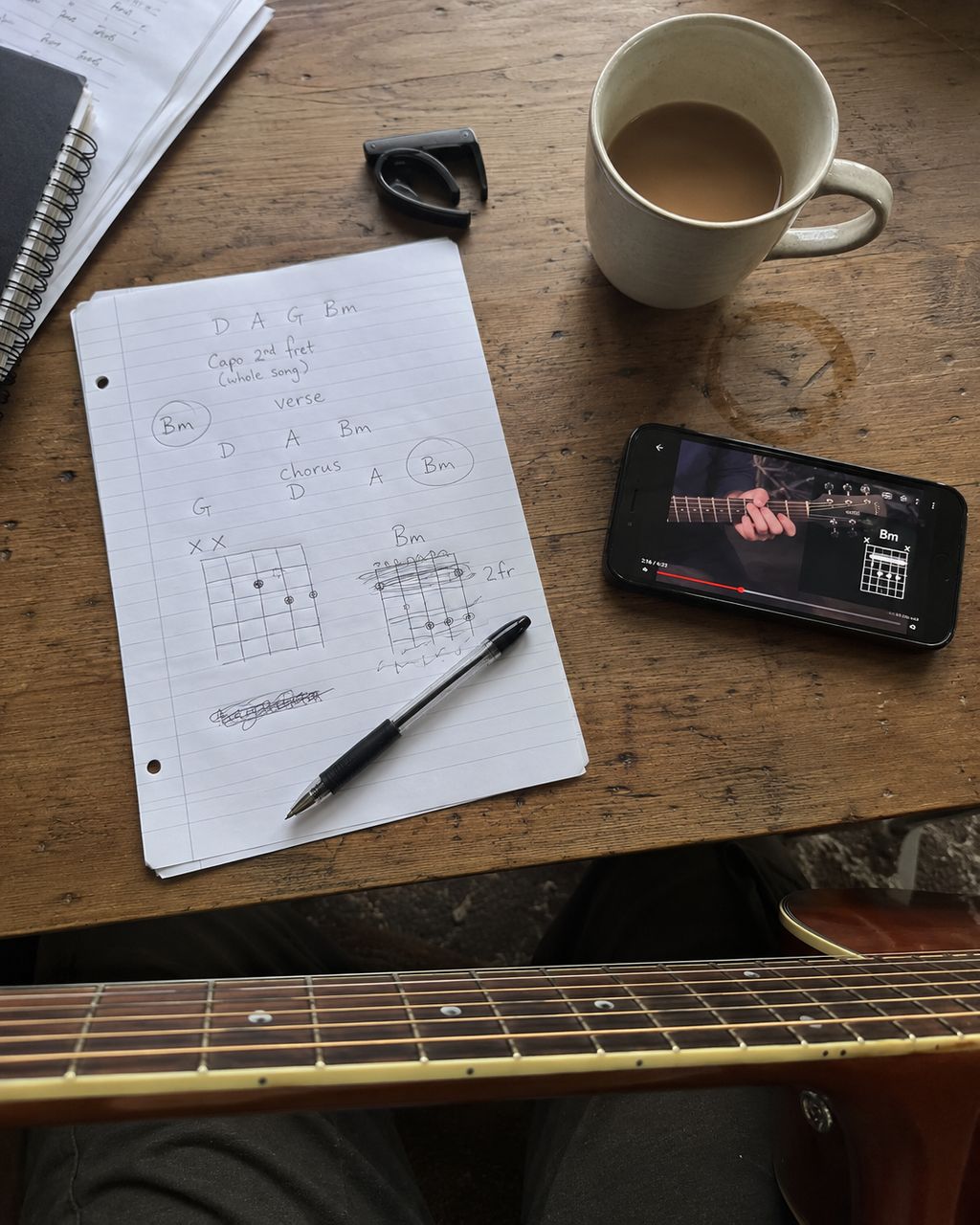
Most beginner guitarists hit the same wall around month four or five. The G chord is locked in, the C feels natural, the Em practically plays itself. Then someone writes out a chord chart with Bm on it and the whole mood shifts. It's not you — it's a genuinely awkward chord, and getting through it is mostly a matter of clocking reps until your hand stops arguing with you. Some players track those reps obsessively; a few guitarists I know use the grid sheets from 500 card game as practice scorecards since the format's already there and it beats drawing your own table. Either way, here's how to actually play the thing.
Why Bm Is Such a Pain in the Neck (and Fingers)
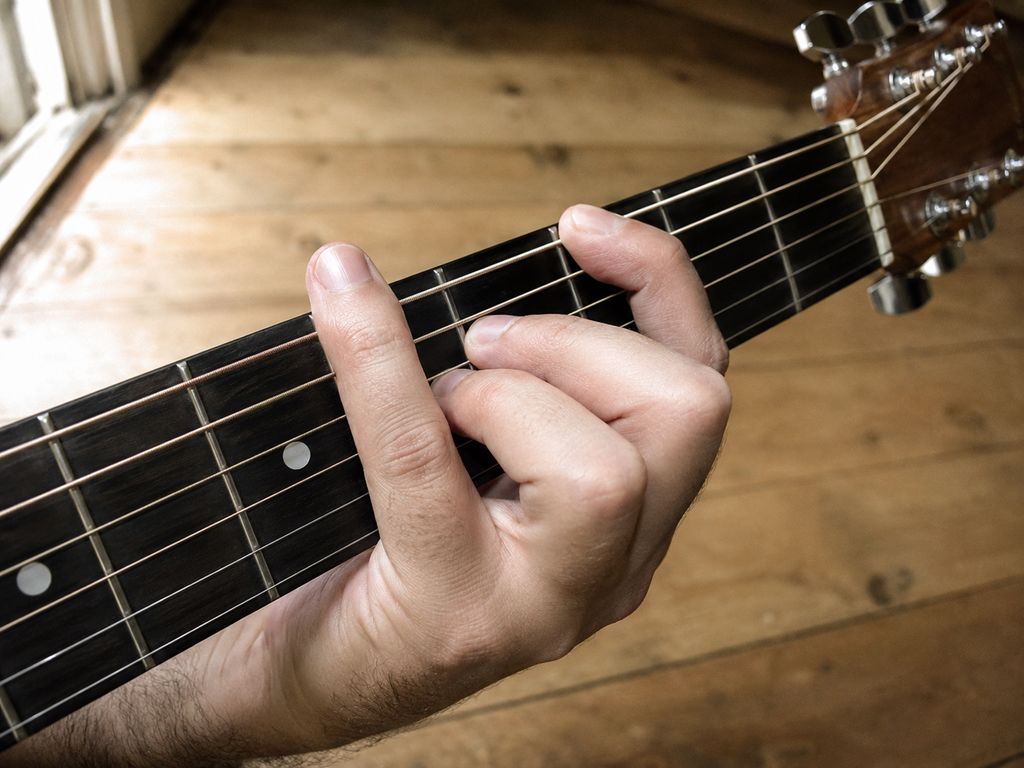
The short version: Bm is a barre chord, and barre chords ask your index finger to do something it's genuinely never done before. That finger has to press down across all six strings simultaneously at the second fret while your other fingers form a shape above it. It's awkward, it takes real grip strength, and for the first few weeks it will probably sound like someone stepped on a cat.
This isn't a you problem. It's a physics problem. The index finger isn't built for this position out of the box. You're essentially building a new callus on a part of your hand that doesn't have one yet, and asking it to apply even pressure across six strings while everything else is also happening. That takes weeks, sometimes longer. Give yourself permission to be rubbish at it before you get good at it.
The full barre version has your index finger lying flat across all six strings at fret 2, your middle finger on the B string at fret 3, your ring finger on the D string at fret 4, and your pinky on the G string at fret 4. Reading that is almost as exhausting as playing it.
The Full Barre Bm: What It Looks Like and Where It Goes Wrong
Bm (Full Barre)
e ──2──
B ──3──
G ──4──
D ──4──
A ──2──
E ──x──
Index: barre across A to e at fret 2
Middle: B string, fret 3
Ring: D string, fret 4
Pinky: G string, fret 4
The low E string is muted. Your actual bass root note is the A string fretted at 2, which gives you a B. So leaving the low E out is fine and most players don't bother trying to barre it.
Buzzing strings usually mean your index finger isn't sitting close enough to the fret wire. Get it as close to fret 2 as possible without crossing over. Even a couple of millimetres of extra distance kills clarity.
Muted strings in the middle of the chord, particularly on the G or B strings, often happen because your index finger has a slight natural bend and leaves a gap. Try rolling the finger very slightly toward the headstock so the bony edge rather than the fleshy pad makes contact with the strings. It feels strange at first but distributes pressure much more evenly.
Wrist position matters more here than with open chords. Keep your fretting wrist tucked under the neck so your thumb sits roughly behind the index finger or a little lower. If the thumb is creeping over the top of the neck you've lost the mechanical advantage you need to get that barre ringing cleanly.
Practice this in short bursts. Two or three minutes a day, then rest your hand. That will get you further than a miserable forty-five minute slog that ends in frustration.
The Cheat Version Most Teachers Should Lead With

Here's something most guitar resources bury or skip entirely: there's a four-string version of Bm that sounds completely fine in the vast majority of songs, and it's significantly easier to get under your fingers.
Bm (4-String Version)
e ──2──
B ──3──
G ──4──
D ──4──
A ──x──
E ──x──
Index: e string, fret 2
Middle: B string, fret 3
Ring: D string, fret 4
Pinky: G string, fret 4
You mute the low E and A strings entirely by either not strumming them or resting your thumb or the underside of your index finger lightly against them. What you're left with is a chord that contains all the correct notes (B, D, F#) and sits perfectly well in any mix.
Will it sound slightly thinner than the full barre version? Honestly, a touch. Will anyone around a campfire notice? Almost certainly not. This version is particularly useful early on because you're not fighting the barre at all. Four strings, four fingers at manageable positions, and you can actually hear whether each note is ringing cleanly, which makes it a good diagnostic tool even before you attempt the full chord.
Some people play this version their whole lives and there's nothing wrong with that.
Songs Worth Practising With
Getting a chord properly into your hands means playing it in real songs, not just drilling it in isolation. The actual skill is switching into and out of Bm smoothly, and that only happens in context.
"Losing My Religion" by R.E.M. is the classic Bm workout. The progression keeps circling back through it, the tempo is forgiving enough that you have a moment to actually land the chord, and the song is recognisable enough to feel rewarding. If you're not sure where to begin, begin here.
"Let Her Go" by Passenger was enormous on Triple J and has stayed in the acoustic pub rotation ever since. Bm falls in a predictable spot in the progression, the fingerpicking version is gentle on timing, and the song is enjoyable enough to practise for twenty minutes without getting bored.
"Take Me Home Country Roads" by John Denver has Bm sitting right in the main verse progression alongside G, D, and Em. The tempo is slow and consistent, the chord is easy to anticipate, and there's something satisfying about locking it into a song this widely known.
"Diamonds" by Rihanna has become a staple for acoustic players and Bm falls in the middle of a four-chord loop that repeats long enough to really drill the switch. Play it a hundred times at a party and it'll be locked in for good.
For something distinctly Australian, have a crack at "Flame Trees" by Cold Chisel. The song isn't easy overall but Bm appears naturally in the chord movement, and working through a Chisel song properly feels like a genuine milestone.
Practice Tips That Will Actually Help
The single most useful thing you can do is practise the switch from G to Bm over and over again. That's the transition that appears most often in actual songs, and it's the one that will trip you up when it counts. Set a timer for sixty seconds and go G to Bm, G to Bm, slowly, without worrying whether it sounds perfect. You're teaching your hand a movement, not performing for anyone.
Use a metronome at whatever tempo lets you make the switch cleanly. If that means 50 BPM, fine. Speed follows accuracy, and rushing just reinforces bad muscle memory.
The one-minute chord change drill is exactly what it sounds like: pick two chords, set a timer for sixty seconds, count how many clean changes you complete, write the number down, try to beat it the next day. Track it on paper with dates and a simple tally. It's boring in the best possible way, and it works faster than most people expect.
Bm is going to feel impossible right up until the day it doesn't. There's no shortcut through that gap, only the other side of it. But once it clicks, a whole range of songs that were previously frustrating open right up, and you'll find yourself switching into it without even thinking. Keep at it. Your fingertips will harden up, your wrist will find its angle, and one arvo it'll just be a chord you play.
Recommended

Kasam Ki Kasam Chords - A.R.Rahman & Shaan - Kabhi Khushi Kabhi Gham
Tum Se Chords - Teri Baaton Mein Aesa Uljha Jiya - Sachin Jigar